To change your mailing address, arrange USPS forwarding and update your accounts with each sender. Start your change-of-address checklist before moving day. Prioritize housing services, insurance, payroll, financial accounts, and any government records with a deadline.
A forwarding request can redirect eligible mail. It does not complete your bank, tax, vehicle, or benefit updates. Keep a record of what you submitted, and confirm each organization saved the address you intended. This guide covers US moves.
Your change of address checklist
Use the table as a starting list. Cross out services you do not use and add accounts specific to your household. The timing below is a planning recommendation. An agency deadline, policy requirement, or delivery cutoff takes priority.
| Account or service | When to act | What to verify |
|---|---|---|
| Landlord or property manager | Before move-out under your lease | Notice requirements and address for deposit correspondence |
| Electricity, gas, water, and trash | Arrange before moving day | Stop and start dates for both properties |
| Internet, phone, and home security | Before the move | Installation, service transfer, and equipment return instructions |
| USPS forwarding | Before the move with time for approval and processing | Names, addresses, start date, and confirmation code |
| Home, renters, auto, and health insurance | Contact the insurer before the move | Coverage dates, insured location, and vehicle garaging address |
| Employer and payroll | Before the payroll cutoff affected by your move | Residence, work location, mailing address, and tax form delivery |
| Banks, cards, lenders, and investments | Schedule around the move | Mailing, residence, and billing fields for each account |
| Driver license, vehicle, and voter records | Check requirements before moving | State deadlines and separate updates for each record |
| IRS and state tax agencies | Submit the applicable address update | Form or method used and processing confirmation where available |
| Benefits and immigration records | Check the agency process before the move | Reporting deadline, household details, and each affected case |
| Doctors, pharmacy, schools, and childcare | Before the next appointment or service | Contact details, prescription arrangements, and record transfers |
| Shopping accounts and recurring shipments | Before the next order cutoff | Saved defaults, active orders, subscriptions, and payment billing address |
| Toll accounts and vehicle services | Around the move | Address, plates, vehicles, and account notices |
| Pets, memberships, and personal contacts | Around the move | Microchip registry, vet, local licenses, clubs, family, and friends |
| Business and freelance accounts | Before using the new address | Clients, vendors, payment processors, licenses, and state filing records |
Assign one household member to each task when you share accounts. Track each adult’s records separately where required.
Decide which address belongs in each field
Your mailing address tells an organization where to send correspondence. Other fields serve different purposes.
A residence address identifies where you live. A shipping address identifies where an order should arrive. A billing address belongs to the payment account. An insurer may also need the property location or the place you keep your car.
For example, you might receive correspondence at a private mailbox while living in an apartment and sending a furniture order to that apartment. Enter the address that matches each field. Ask the organization before using a mailbox instead of a residence or operating location.
Write down the complete destination, including the apartment, unit, or assigned private mailbox number. Match the format supplied by the property manager, mailbox provider, or receiving institution.
Arrange USPS forwarding before moving day
USPS requires identity verification. Its current guidance says to allow at least 7 to 10 business days after approval for the change to take effect.
Use the official USPS forwarding guidance to begin.
1. Choose the move type and start date
Choose a permanent request for a move without a planned return. Choose temporary forwarding for an absence that meets USPS time limits. Confirm who is moving, then select the option that fits: individual, fs.
2. Submit the request and verify your identity
Online submission currently carries a $1.25 identity verification fee. Alternatively, visit a Post Office with acceptable identification and request the Mover’s Guide containing PS Form 3575. The paper process is free. Follow any additional verification instructions.
3. Save the confirmation and contact senders
Keep your confirmation code. Update organizations that send time-sensitive documents directly. Sender instructions can prevent forwarding, and USPS forwarding does not redirect deliveries handled entirely by another carrier. Confirm existing orders with the seller.
Update government records through the agency responsible
Use the USAGov address-change directory to find federal and state services. Complete the relevant agency process even after arranging postal forwarding.
Driver license and vehicle records
Check your state DMV requirements before the move. A blanket 30-day deadline doesn’t apply nationwide. California requires you to notify the DMV of an address change within 10 days. Moving to another state may also require a new license or vehicle registration
Check voter registration requirements for your new location and the next election. Update each benefit program you use through its own process. Social Security, VA benefits, and state programs may need different steps. Check which household members and records the submission covers.
IRS and state tax records
The IRS address-change instructions list several methods, including Form 8822 for individuals and Form 8822-B for businesses. You can also list your new address on a tax return or notify the IRS in writing
USPS data may update some IRS records, but the IRS still tells taxpayers to notify it directly. Processing generally takes four to six weeks after receipt. Check your state tax agency separately.
Immigration records
USCIS generally requires noncitizens in the United States to report a move within 10 days, including when no benefit request is pending. Its stated exceptions include A and G visa holders and visa waiver visitors. Check USCIS instructions for your circumstances and pending cases. A postal forwarding request does not complete this report.
Check deliveries and policies that an address edit can miss
Changing an account profile may leave an order already in progress unchanged. Review the next shipment in each recurring order, including prescriptions, pet food, meal kits, and subscription boxes. Confirm whether you can still edit it or need to contact the seller.
For utilities, record two actions for each provider. End or transfer service at the old property and arrange service at the new one. Save the effective dates and any receipt for returning equipment.
For insurance, describe the move to the insurer. A correspondence update alone may leave the insured property, garaging location, or coverage details unchanged. Ask what the insurer needs before the move takes effect.
Track submission and confirmation separately
An update is easier to finish when you can see what remains unresolved. Keep a tracker with the organization, address field, effective date, submission date, and confirmation. Avoid storing passwords or full identity and account numbers in any of the three statuses. Mark a task pending before you act, submitted after you send it, and confirmed after you check the saved record or receive confirmation. This is a suggested workflow, not an agency rule.
For example, a bank may confirm your correspondence address while a recurring retailer still has an order scheduled for your old apartment. Record those as separate tasks. An updated profile doesn’t prove it’s changed.
During your first month, review forwarded envelopes and expected correspondence each week. Contact any sender still using the old address. Recheck less frequent mail around annual renewals and tax form season. If an expected document is missing, contact its sender to check the address and delivery options.
Consider a virtual mailbox if your mailing needs continue after the move
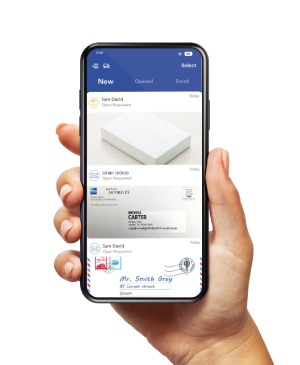
A virtual mailbox gives you a mailing address you can keep even when you change residences or travel. PostScan Mail’s virtual mailbox service lets you view incoming items online and request available actions such as content scans, forwarding, or pickup where offered.
Activate the mailbox before sharing it with senders. Choose the location and plan, confirm recipient names, and complete USPS Form 1583 and identity verification. Form 1583 authorizes mail receipt. It does not redirect mail from your old address or update your accounts.
Send a test letter and check the receiving details. Confirm that each institution accepts the address for the intended mailing use. Keep providing your residence or business location wherever required.
If this solves an ongoing need, compare PostScan Mail locations and review plans and handling fees. Include scans, forwarding postage, storage, and recipients in your cost comparison. For a single move with reliable home delivery, direct account updates and USPS forwarding may meet your needs.
Access & Manage Your Postal Mail
Anywhere Anytime!
Receive mail anywhere, on any device.
We offer 1000+ mailing addresses for both personal and business use.