A missed renewal can disrupt a trip long before an unreliable Wi-Fi connection does. For digital nomads, the most useful New Year reset is an administrative review: confirm your travel permissions, organize tax records, keep mail accessible, and test how you would recover your accounts abroad.
Start with the next deadline that could interrupt your travel or income. Then work through your documents, money, mail, technology, and schedule. January is a useful reminder, but you can run this digital nomad checklist before any major move. Changing calendars doesn’t reset a visa allowance or cancel tax obligations.
This guide focuses on U.S. travelers and people maintaining U.S. mail or financial ties. Immigration, tax, and insurance decisions still depend on your circumstances and destination.
Your digital nomad reset checklist at a glance
Use this sequence to spot urgent problems before you spend time reorganizing apps or buying equipment.
| Priority | Review | Finish with |
|---|---|---|
| 1 | Passport, entry permission, authorized stay, and work permission | Verified requirements and a dated next action |
| 2 | Tax records and business obligations | A complete travel log and adviser questions |
| 3 | Mail, notices, and items requiring originals | A review schedule and forwarding plan |
| 4 | Banking, recurring costs, and insurance | Working payment backups and confirmed coverage |
| 5 | Account access, devices, and files | A tested recovery route and restored sample file |
| 6 | Work hours and the next destination | An approved work plan with reliable connectivity |
Resolve an imminent expiration or unanswered official notice first. A useful reset ends with completed tasks or tasks assigned a due date.
Separate annual reviews from rolling travel limits
Keep three kinds of dates separate: your chosen review date, immigration stay calculations, and individual renewal or filing deadlines.
Your annual review is a planning habit. Immigration permission follows the rules attached to your nationality and status. Passports, insurance policies, contracts, and filings each have their own dates.
For many short-stay visitors, the Schengen limit is 90 days in any rolling 180-day period. It is not 90 days per calendar year or per Schengen country. The European Commission’s official short-stay calculator explains how to calculate it. A visa authorizing a shorter stay has its own limit; long-stay visas and residence permits require a different assessment.
For example, a traveler reviewing plans in January must still include relevant Schengen stays from December in the rolling calculation. Starting a new annual spreadsheet doesn’t erase those visits. Keep a continuous travel history across year boundaries.
Check documents and permissions before booking
Check the destination authority’s current requirements for your passport, planned activities, transit route, and length of stay. Entry permission and permission to work remotely are separate questions; verify both rather than treating a tourist admission as approval to work.
The State Department’s international travel checklist is a useful starting point for U.S. travelers. Passport validity requirements vary by destination, so check the rule for your itinerary rather than applying a universal six-month rule.
Record these items for your next destination:
- Passport expiration and any destination-specific validity requirement.
- Required visa or travel authorization and the activities it permits.
- Authorized stay, extension conditions, and any local registration requirements.
- Required supporting documents, including any evidence of onward travel.
- The official source, date checked, and next action.
Keep copies of protected documents accessible without relying on a single device. U.S. travelers can also consider STEP enrollment for destination alerts and to help the embassy contact them during an emergency.
Organize tax records without relying on a day count shortcut
Living abroad does not automatically end U.S. tax obligations. The IRS states that U.S. citizens and resident aliens abroad generally remain subject to U.S. rules on worldwide income. Foreign earned income exclusions and foreign tax credits have eligibility requirements and must be claimed through the relevant return.
Use the reset to reconcile your travel dates, income records, business expenses, and foreign financial account information. Flag gaps while you can still retrieve booking confirmations and statements.
Do not use “fewer than 183 days” as a universal tax exemption. Ask a qualified cross-border tax adviser to assess the rules that apply to your actual circumstances, including any continuing state obligations. A mailing address alone does not settle that assessment.
If you operate a business, add its filing dates, licenses, insurance, and registered agent renewal to the review. Keep business compliance tasks separate from your personal travel permission.
Build a mail workflow that works between destinations
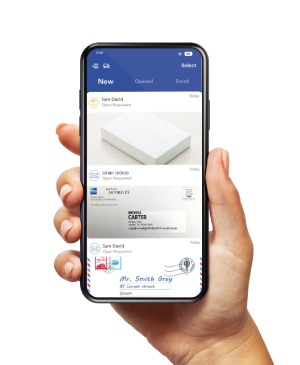
A virtual mailbox lets you review incoming postal mail online and request handling actions. It is useful when you need access to correspondence while your delivery location keeps changing.
PostScan Mail’s mailbox options for digital nomads and RV travelers provide a relevant starting point. In its mail-handling process, operators upload images of incoming envelopes or package labels. You can then request content scanning, forwarding, or other available handling options.
An envelope image is not the same as a scan of its contents. Review new items and request the action you need. Confirm the selected location’s services, processing times, storage terms, and fees before relying on it.
Decide which items need an original
For each important item, choose a next action:
- Request a content scan when you need to read the document remotely.
- Retain the original when a recipient, agency, or transaction requires it.
- Arrange forwarding when you have a confirmed delivery address and enough time to receive it.
- Request disposal only after checking that the original is unnecessary.
For international forwarding, confirm destination restrictions, carrier options, charges, and whether your accommodation will accept delivery. Allow for processing, transit, customs, and possible delays before requesting shipment to a short stay.
Keep address purposes separate
A mailing address receives correspondence. A residential address describes where you live. Domicile and tax residency involve separate legal tests. Financial institutions and government agencies decide which address types they accept for each purpose.
Confirm the requirements before changing account records. A virtual mailbox does not establish legal residence, immigration status, or a physical business operating location.
Review spending and insurance against your actual itinerary
Budget for the costs that continue when you leave a destination: subscriptions, storage, mail handling, insurance, software, and obligations at home. Add deposits, transport, connectivity, and a reserve for plan changes.
Compare your recent spending with the amount you expected to spend. Cancel unused services, note annual renewals, and check currency conversion, ATM, and account fees directly with providers.
Keep a backup payment method separately from your primary card. Check access and eligibility for your actual residence and travel circumstances before depending on any account abroad.
Review insurance using specific questions:
- Does it cover all planned countries and the full travel period?
- What emergency medical and evacuation benefits apply?
- What exclusions or conditions affect your work and planned activities?
- What approvals, documents, and payments does a claim require?
- How will you contact assistance without your usual phone?
Save the insurer’s answers and policy wording. A product labeled “travel insurance” doesn’t prove every part of your itinerary is covered.
Test account recovery and backups before you need them
Work through a practical scenario: your phone is lost, your usual SIM is unavailable, and you need to access email, banking, work files, and your mailbox.
For each essential account, check its supported authentication and recovery options. Enable two-factor authentication where available, update recovery details, and store recovery codes securely apart from the device they may help you replace. Don’t keep your only recovery route inside the account you would be locked out of.
PostScan Mail offers two-factor authentication and active-session management. Review those controls alongside your other critical accounts.
Test a backup by restoring a non-sensitive sample file and opening it. Confirm that you can find the correct version and access required software. Keep a protected backup separate from your working files, including an offline copy where appropriate and permitted by your employer or client.
Record what failed during the test. A recovery process you have practiced is more useful than a list of services you assume will work.
Plan work around your next location
Confirm that your employer or clients approve the location, working hours, and data handling arrangements. Ask accommodation providers about connectivity and identify a usable backup connection or workspace.
Review meeting times for the actual travel dates, including daylight saving changes. Leave room around travel days for delays and setup rather than scheduling critical calls immediately after arrival.
Choose a travel pace that fits your commitments and budget. Longer stays may reduce repeated setup work, but compare the actual costs and conditions instead of assuming a fixed savings percentage.
Turn the reset into a repeatable routine
Create one task tracker with five fields: item, verified source or provider, date checked, next action, and due date. Store sensitive documents separately with appropriate access controls.
For example: “Insurance renewal; insurer policy and written reply; checked today; confirm next destination is covered; complete before booking.” This records the evidence behind the decision and the action still needed.
Use this suggested maintenance schedule, adjusting it for time-sensitive mail and your itinerary:
| When | Suggested review |
|---|---|
| At least weekly | Check incoming mail, requested scans, notices, and unresolved deliveries |
| Monthly | Reconcile spending and travel dates; review upcoming renewals and filings |
| Before each move | Recheck entry and work permission, insurance, delivery timing, and connectivity |
| Annually | Review the full system, close unused services, and test recovery arrangements |
Do not postpone an approaching deadline until your next scheduled review.
Start with the task that could interrupt your next trip
A successful digital nomad reset leaves you with verified requirements, accessible records, working backups, and a plan for important mail. Complete the urgent tasks first, then maintain the system as your plans change.
If mail is the weak point, review how PostScan Mail works and compare a location’s handling options with your travel schedule. Set up and test access before sending important correspondence there.
Access & Manage Your Postal Mail
Anywhere Anytime!
Receive mail anywhere, on any device.
We offer 1000+ mailing addresses for both personal and business use.