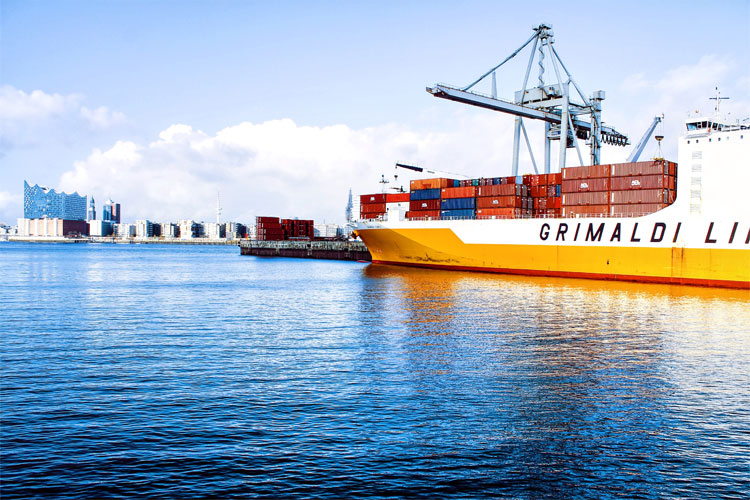
Moving products globally requires far more than putting a box on a truck. Cross-border logistics is a multi-step chain involving shipping carriers, border patrol agencies, customs brokers, and international compliance laws.
A single missing digit on a invoice can freeze inventory in a bonded warehouse for weeks.
Whether you are scaling an e-commerce brand, sourcing materials from abroad, or shipping commercial goods to international clients, executing international shipping requires understanding how physical cargo actually moves from origin to destination.
1. Select the Right Transit Mode and Terms
Before cargo leaves a factory floor, you must determine how it moves and who assumes liability at each step of the journey.
Air freight offers rapid delivery (2–5 days) and high security for lightweight, high-value goods, whereas ocean freight is vastly more economical for bulk inventory despite taking several weeks.
Shipping costs depend heavily on dimensional weight (calculated via volumetric formulas), meaning poorly packed, lightweight boxes can cost significantly more than dense cargo.
To establish clear legal boundaries, standardized Incoterms define buyer and seller responsibilities—terms like DDP (Delivered Duty Paid) require the seller to handle all transit, duties, and customs clear through delivery, while EXW (Ex Works) places the maximum burden on the buyer from the supplier’s door.
Read also: Best Ways of Shopping and Shipping From The USA
2. Prepare Essential Customs Documentation
Customs authorities rely almost entirely on paperwork to determine entry approval, tariffs, and restricted status for incoming cargo.
The Commercial Invoice serves as the primary legal record detailing the buyer, seller, full item descriptions, declared values, and terms of sale, where any inaccuracy leads directly to border seizures or heavy financial penalties.
Goods are categorized internationally using Harmonized System (HS) codes, which are 6-to-10-digit numerical identifiers that strictly dictate the exact duty rate assessed at the destination border.
Finally, the Bill of Lading (BOL) for ocean freight or Air Waybill (AWB) for air freight acts as the official contract between the cargo owner and the transportation carrier, functioning as both a receipt of goods and a legal document of title.
3. Clear Border Controls and Calculate Landed Costs
Every cross-border shipment undergoes two legal checkpoints: export clearance from the origin country and import clearance at the destination.
Export clearance validates the shipment against national security lists and export control laws before allowing it to board a vessel or aircraft.
Upon arrival, destination customs authorities inspect the documentation to assess mandatory duties, tariffs, and local taxes such as VAT or GST based on the HS code and declared value.
Achieving real margin transparency requires calculating:
Total Landed Cost combining Product Cost + Freight Charges + Insurance + Customs Duties + Import Taxes + Brokerage Fees
to ensure products are not being sold internationally at a hidden net loss.
Read here How to Find USPS Lost Packages
4. Manage Last-Mile Handoffs and Risk Mitigation
Once a shipment clears import customs, it transfers from international line-haul carriers to regional ground networks for final delivery.
Parcels routinely pass through multiple independent logistical providers, requiring localized shipping platforms or unified tracking APIs to ensure tracking numbers translate seamlessly across international lines.
Because carrier liability under standard international conventions is limited to nominal baseline rates per kilogram, purchasing third-party marine cargo insurance is necessary to protect against loss or damage of high-value freight.
Furthermore, managing returns requires an established reverse logistics plan, as moving returned goods back across borders will trigger duplicate duty charges unless formal duty drawback claims are filed with customs authorities.
Why choose PostScan Mail?
PostScan Mail offers competitive shipping prices and takes you through the whole process in a few easy steps. Offering a mail consolidation service, your packages will be consolidated for lower shipping fees before shipment.
Highly-skilled mail operators that are certified and experienced will care for your shipment using the necessary packaging and labels according to product size and weight.
They are up-to-date with all the latest shipment and customs laws, taking care of all the necessary procedures and forms.
All you need to do is fill in the recipient info and choose your preferred shipment method!
With USPS as our only courier, we offer two international services, First Class and Priority services with the minimal charges and fastest delivery.
No more looking into new customs laws or guessing the weight and size of your shipment for the right packaging.
Our best virtual mailbox service offers you international mail forwarding as one of its many benefits. And the best part, you get to remotely control all your shipments through your account on your phone or computer.
Build a Resilient International Shipping Strategy
Mastering international shipping is ultimately an exercise in risk management and operational precision.
By standardizing your customs documentation, selecting the optimal transit modes and Incoterms upfront, and accounting for every line item in your total landed cost, you transform cross-border logistics from an unpredictable liability into a scalable competitive advantage.
As global markets continue to integrate, building a resilient, compliant supply chain ensures your business can deliver value to customers anywhere in the world without getting derailed by border friction or hidden operational fees.