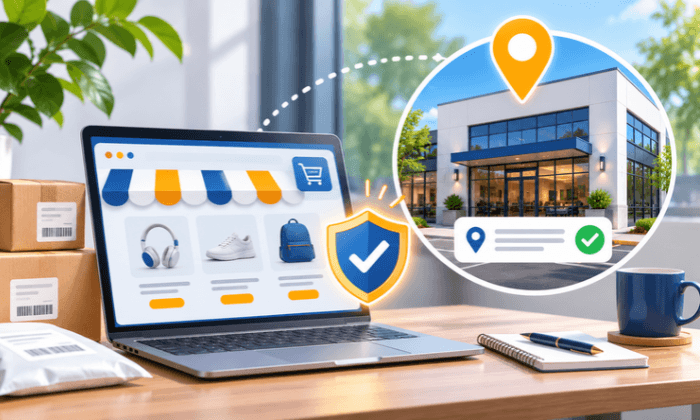
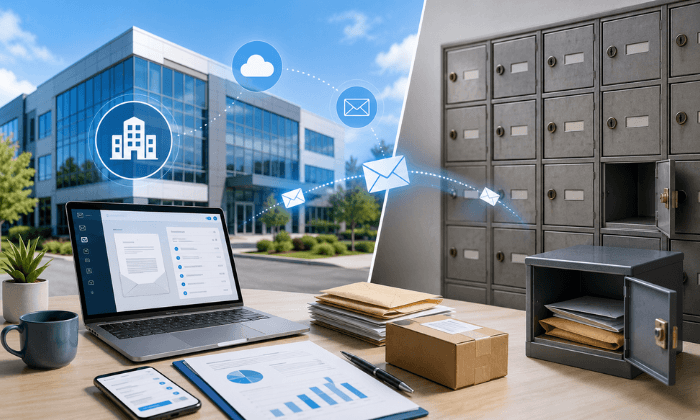
A virtual mailbox for dropshipping gives your business an address for correspondence, supplier samples, and customer returns that the location agrees to accept.
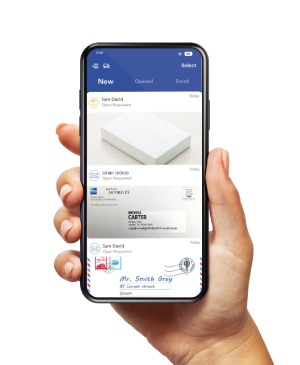
You review received items online and request the next action. It helps you manage mail while keeping your home address off customer-facing materials.
Choose the service around what happens after a parcel arrives. Receiving a box, checking its contents, refunding a customer, and preparing a resale shipment require different actions. Confirm who performs each one before publishing your return address.
This guide covers U.S. mailing and returns arrangements for dropshipping stores.
What a virtual mailbox does for a dropshipping store
A virtual mailbox combines a mailing address with online tools to review and manage physical mail. In dropshipping, your supplier usually holds the products and ships customer orders directly. Your mailbox can provide a separate destination for business correspondence and agreed returns.
PostScan Mail’s dropshipping address service receives business documents, samples, and returns, then forwards them. Availability, package acceptance, and handling depend on your arrangement and selected location.
Use this division of responsibilities when planning your store.
| Task | Who handles it | What to confirm |
|---|---|---|
| Original customer order | Supplier or contracted fulfillment provider | Product availability, dispatch time, packaging, and tracking |
| Business mail | Mailbox provider | Recipient names, envelope images, scans, and forwarding |
| Returned parcel | Approved receiving location | Item limits, intake records, storage, and onward instructions |
| Refund or exchange decision | Your store through its sales channel | Policy, evidence, deadline, and payment action |
| Product grading or resale preparation | Provider contracted for those tasks | Inspection standard, testing, SKU records, and packing work |
A mailbox dashboard records received mail and parcels. Treat supplier stock counts, customer orders, and sellable inventory as separate records unless a confirmed system links them.
Where a virtual mailbox can help
Keep business correspondence in one place
Supplier letters, invoices, and notices can reach one address while you work elsewhere. Request scans when you need the contents and forward originals when you need the paper. Assign someone to review the account and respond before deadlines.
A mailing address can reduce how often you have to show your home address. It does not remove identity checks or the need to provide your actual operating or residential address when a bank, government agency, or platform requires it.
Receive returns through an agreed process
A U.S. receiving point can give customers a domestic destination when your supplier operates overseas. You still need a plan for what happens to each return after receipt.
PostScan Mail’s ecommerce returns management service describes receiving, holding, consolidating, and reshipping returns. Ask whether the location can perform any product inspection or repackaging your process requires. Set charges and turnaround expectations before accepting returns there.
A return’s arrival does not itself approve a refund or make the contents ready to resell. Match the parcel to the order and apply the relevant policy and sales-channel requirements.
Manage supplier samples while you work remotely
You can arrange to have accepted samples received and forwarded without sending them to your home. Plan who will examine the product before you list it. A photo of the shipping label can’t confirm its quality, functionality, or suitability for sale.
How to set up a mailbox for dropshipping returns
Agree on the workflow before you change your store’s address or tell customers to send products there.
- Define what will arrive.
List product types, parcel sizes, expected return volume, carriers, and the names customers will use. Ask the location to confirm acceptance and any restrictions. - Activate the account.
Complete identity verification and any required USPS Form 1583 authorization. Confirm the business and recipient names on the account. Use the complete assigned address and mailbox identifier. - Set the return instructions.
Tell customers how to request a return, where to send an approved item, who pays postage, and what information to include. Agree with your supplier on return authorization, deadlines, and credit eligibility. - Test receipt and routing.
Send an agreed test parcel. Check how the location records it, how you match it to an order, how long processing takes, and how you request its next movement. Complete this test before directing customer returns there. - Review each return and close the record.
Check the available evidence, obtain any needed inspection, and choose the agreed destination or disposition. Record the refund or exchange separately in your store, and retain the tracking and handling records.
Use a return merchandise authorization number, often called an RMA, to connect an approved return with its order. Ask customers to place that reference inside the parcel and follow the location’s label instructions. A missing order reference can leave you with a received box that you cannot match to a customer.
Set a review schedule that fits your refund deadlines and storage terms. If you consolidate returns, check that waiting for a batch will not cause you to miss a supplier’s acceptance window.
Compare the cost of receiving and forwarding returns
Compare the full route with the value you expect to recover. A mailbox subscription alone does not establish the cost per return.
Include the plan charge, incoming-item overages, storage, requested inspection, packaging, forwarding handling, and carrier postage. For an international route, identify who pays any duties, taxes, and clearance charges.
Use the PostScan Mail shipping calculator to estimate onward shipping from the selected location. Confirm what the estimate includes. Packaging, dimensions, surcharges, and the final destination can affect the amount charged.
A worked return cost example
The following figures are hypothetical planning inputs, not PostScan Mail prices or a savings forecast. Assume you receive 20 returns in one month and send them onward in one batch.
| Cost component | Assumption | Monthly total |
|---|---|---|
| Mailbox subscription | $40 per month | $40 |
| Receiving and handling | $3 per return for 20 returns | $60 |
| Storage | $2 per return for 20 returns | $40 |
| Onward batch shipment | $100 for the batch | $100 |
| Total modeled cost | 20 returns | $240 |
These assumptions produce an average handling and routing cost of $12 per return. They exclude refunds, product costs, inspection, disposal, duties, taxes, and your team’s work. Replace each input with your quote and add any charges your route requires.
If you can recover less from a product than it costs to process, reconsider the route with your supplier. Direct supplier returns, a returns specialist, or a different refund arrangement may fit that product better, subject to your policy and obligations.
Check store policies and seller responsibilities
Your receiving address supports your process. Your store remains responsible for its customer promises.
Shopify’s dropshipping guidance requires merchants to publish processing and shipping information, as well as a refund policy. Its return-policy guidance includes the destination, timeframe, costs, and contact information. Match those details to what your supplier and receiving location can deliver.
For most goods ordered online in the United States, the FTC’s shipment rule guidance requires a reasonable basis for promised shipment times or, when no time is stated, shipment within 30 days. Delays require the applicable consent or refund process. The FTC also states that the seller remains liable for rule violations caused by its fulfillment house or dropshipper. Shipment and customer arrival are different milestones.
Marketplace sourcing rules also matter. eBay’s dropshipping policy allows fulfillment directly from a wholesale supplier. Listing an item and then buying it from another retailer or marketplace for direct delivery to your customer is not allowed. A mailbox address does not change that sourcing policy.
Choose a mailbox or fulfillment service around the work
A virtual mailbox can fit a store that needs correspondence handling and a receiving point for agreed parcels. As the required work grows, assess the tasks alongside the volume.
If you need unit counts, product grading, barcode scans, kitting, or picking individual orders from stored stock, compare providers that contract for those functions. PostScan Mail also offers a dropshipping service that includes repackaging and reshipping. Confirm the location, scope, workflow, and quote for those tasks rather than assuming a mailbox subscription includes them.
Before you choose an address, ask who will match returns to orders, inspect products, approve refunds, and arrange the next shipment. Review PostScan Mail’s dropshipping options and confirm they match your store’s needs.
Access & Manage Your Postal Mail
Anywhere Anytime!
Receive mail anywhere, on any device.
We offer 1000+ mailing addresses for both personal and business use.