A US virtual shopping address gives you a receiving address for eligible purchases from U.S. retailers. The retailer sends the order there first. You then arrange a separate shipment from the receiving location to your final destination.
PostScan Mail offers package receiving, online management, and forwarding services that can support this workflow. Before buying, confirm that the retailer accepts forwarding addresses, the location can handle your item, and an eligible shipping route exists to your country.
The address is the first step. The full decision also includes payment acceptance, handling fees, international shipping, customs charges, and returns. This guide explains how to check those details before you place an order.
What is a US virtual shopping address?
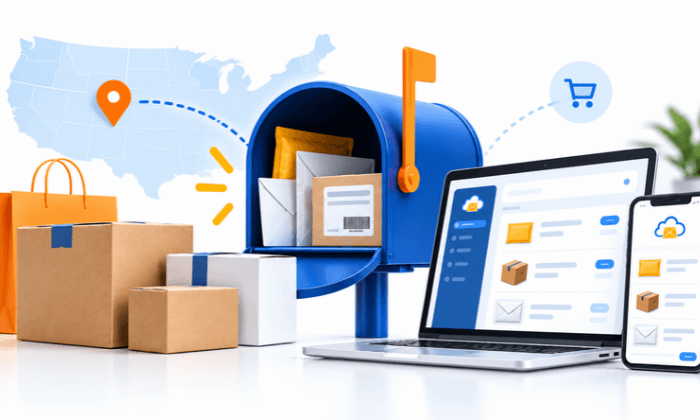
A US virtual shopping address is a physical receiving address you use for online purchases, usually through a package receiving or forwarding provider. “Virtual” refers to managing the deliveries online; the packages still arrive at a real location.
It is a shipping address. It does not automatically become your billing address, establish where you live, or override a retailer’s terms.
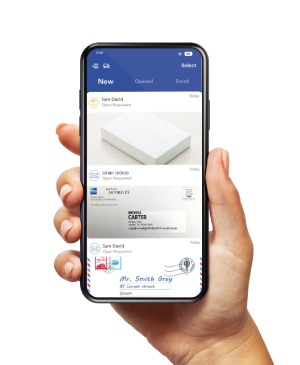
PostScan Mail’s package forwarding service lets you receive packages, upload exterior images, and arrange forwarding through your online account.
Confirm the features available at the location and under the plan you choose.
What can a US shopping address do for you?
A receiving address helps when a retailer supports domestic delivery and allows forwarding but doesn’t offer a suitable direct international option.
You can also manage deliveries from several stores through one receiving account.
Depending on the service, you may be able to hold eligible packages, request extra handling, or combine compatible orders before forwarding.
These options can be convenient when you want control over when purchases leave the United States.
Compare direct international delivery too. A retailer’s delivered price may be lower, and returns may be simpler once you include forwarding fees and import charges.
Check these three things before placing an order
1. Does the retailer accept the address and payment method?
A domestic address doesn’t guarantee a store will accept your order. Retailers may restrict freight forwarders, particular payment methods, destinations, or products.
For example, Best Buy’s international order policy, checked October 28, 2026, says it does not ship to known freight forwarders.
A receiving address cannot remove that restriction.
Check the actual seller’s policy, including marketplace sellers. If a store rejects the address, use an option it permits or choose another retailer.
Do not change or conceal address details to evade its policy.
2. Can the item be received and forwarded on your route?
Check the product with the receiving location, outbound carrier, and destination country before paying.
A package’s arrival at a U.S. facility does not mean it can be exported or imported.
Send the provider a product link, destination, estimated packed size and weight, and details about batteries, liquids, or other unusual contents.
Ask for confirmation when the product may need special handling.
Rules depend on the carrier and route. For example, USPS international restrictions prohibit alcohol-containing perfumes and nail polish from international mail.
Lithium-battery shipments face separate conditions and prohibitions. Don’t assume an item eligible for domestic delivery is eligible for the next leg.
3. Is the full cost and timing acceptable?
Estimate the total delivered cost, not just the retailer’s price. Include both delivery legs, provider fees, any storage or packing work, and applicable import charges.
Check return deadlines and product compatibility before forwarding. For time-sensitive purchases, allow time for retailer processing, domestic delivery, facility processing, international transit, and customs. A carrier’s transit estimate does not cover every stage.
How to get and use your PostScan Mail shopping address
Step 1. Choose a location for the packages you expect
Browse PostScan Mail’s U.S. address locations. Ask whether the specific location accepts your expected carrier, package dimensions, weight, and type of goods.
Confirm whether it supports international forwarding to your destination and any handling you plan to request.
A broad location network does not mean every location offers identical services.
Step 2. Compare the plan and additional charges
Review the current plans and additional fees. Compare receiving allowances, forwarding and consolidation charges, package storage, extra recipients, and any oversized-item fees.
Ask when storage starts and how long the included period lasts for your plan and item type. Do not rely on a general promise of free storage without checking the period and conditions.
Step 3. Complete setup before sending purchases
Complete the provider’s identity and recipient checks, then confirm the address can receive your orders.
For USPS deliveries at U.S. locations, review PostScan Mail’s USPS Form 1583 instructions and complete the required authorization. PostScan Mail states that customers receiving only non-USPS deliveries still need identity verification, although that delivery-only arrangement does not require Form 1583.
Use the exact recipient name, street address, and private mailbox or unit identifier the provider supplies. Missing or altered identifiers can make it harder to match a delivery to your account.
Step 4. Place an eligible retailer order
Enter the receiving address as the shipping destination and follow the retailer’s payment and checkout requirements. Keep your order confirmation, item descriptions, invoice, and domestic tracking number.
Verify that the order has actually been accepted. An address saved in a shopping account does not prove the retailer approved the purchase.
Step 5. Review the package after it is processed
Carrier delivery and appearance in your online account are separate events. Allow for the location’s receiving process and ask about its normal processing schedule.
An exterior package image helps identify the delivery. It does not prove that the contents are correct or undamaged. If you need opening, photographs, or another check before forwarding, ask what the location offers and what it costs.
Step 6. Choose the outbound shipment
Confirm the final destination, service, packing instructions, weight, dimensions, and total quote. If you have several compatible orders at the same location, compare separate forwarding with consolidation.
Review any shipment protection or insurance terms, including coverage limits, exclusions, evidence requirements, and who must file a claim. Do not assume the retailer’s delivery protection automatically covers the separate forwarding journey.
Step 7. Confirm customs information and track delivery
Supply accurate item descriptions, quantities, values, and any other required information. Keep purchase records available. A provider’s help with paperwork doesn’t remove the need for accurate shipment details.
Track the outbound shipment using its own reference. Respond to legitimate carrier or customs requests through verified channels, and keep shipment records until delivery and any issues are resolved.
What does a US shipping address really cost?
Your delivery cost can include more than the mailbox subscription and postage.
Use the following fictional example as a budgeting checklist. These figures are not PostScan Mail prices, carrier quotes, or destination-specific tax calculations.
| Budget component | Hypothetical amount |
|---|---|
| Retail purchase | $100 |
| Retailer delivery to the U.S. receiving address | $8 |
| Tax charged at checkout | $7 |
| Allocated receiving and forwarding service costs | $6 |
| International shipping | $35 |
| Optional shipment protection | $3 |
| Assumed destination duties and taxes | $20 |
| Assumed clearance or carrier administrative charge | $5 |
| Illustrative total | $184 |
In this example, a $100 product costs $184 delivered. Actual costs may be higher, lower, or include other charges. Replace each assumption with information for your purchase, chosen location, carrier, and destination.
A shipping quote does not necessarily include duties, import value-added tax (VAT) or other taxes, or carrier administrative fees. DHL’s customs guidance explains that destination authorities assess import charges and that even a duty-free rate can leave other charges payable. Confirm who pays and whether charges are collected before shipment or later.
Do not treat a U.S. mailbox as a general tax exemption. Review the tax shown at checkout separately from the destination’s import requirements.
Does package consolidation always save money?
No. Consolidation can reduce the number of outbound parcels, but the final price depends on packing, dimensions, weight, handling charges, and the service selected.
Carriers may use dimensional weight, which reflects the space a box occupies. A larger consolidated box can therefore cost more than expected even when the contents are light.
Before combining orders, ask for the final packed size and compare the complete quotes. Also consider whether removing retail packaging would affect a possible return, warranty claim, collectible value, or protection during transit.
Only combine goods that can travel together on the selected route. Don’t wait for another order without checking storage charges and the first item’s return deadline.
Understand the two delivery legs
A retailer’s “delivered” message can refer to arrival at the U.S. receiving location, not arrival at your home abroad.
| Stage | What it means | What to do next |
|---|---|---|
| Retailer order and domestic delivery | The seller is processing or sending the purchase to your U.S. address. | Keep the order details and domestic tracking number. |
| Receiving and account processing | The provider receives and identifies the package. | Review the account entry and request any necessary handling. |
| Outbound forwarding | A separate shipment moves toward the final destination. | Keep the outbound tracking reference and shipping documents. |
| Customs and final delivery | Authorities and the destination carrier handle clearance and delivery. | Supply requested information and pay applicable charges through verified channels. |
Keep the order number, domestic tracking number, provider package reference, and outbound tracking number together. This makes it easier to identify which stage needs attention if something goes wrong.
Get shipping address after checking the whole route
A US virtual shopping address can connect an eligible domestic retailer order with a separate forwarding shipment. It works best when you confirm retailer acceptance, item eligibility, location capabilities, total cost, and return options before buying.
Choose a suitable PostScan Mail location, complete setup, and check with your provider before your first purchase if you are unsure about the item or destination. Start with a manageable order before committing to several expensive or hard-to-return purchases.
Access & Manage Your Postal Mail
Anywhere Anytime!
Receive mail anywhere, on any device.
We offer 1000+ mailing addresses for both personal and business use.