Your next campsite may change before your mail arrives. A virtual mailbox gives you a receiving address where mail can wait while you review it online and decide what needs forwarding.
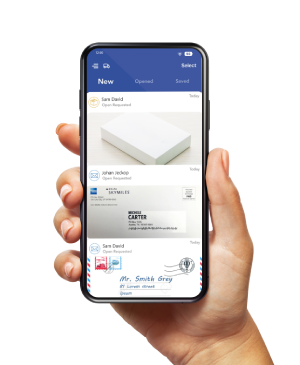
For full-time RV travelers and van lifers, the process is straightforward. Send mail to your mailbox address, view envelope images in your account, request scans of letter contents, and forward originals or packages to a destination that has agreed to receive them.
The address helps you manage deliveries while you travel.
Before using it for banking, licensing, insurance, or voting, check the requirements for that specific purpose. A mailing address alone does not establish residency or domicile.
How a Virtual Mailbox Works for RV Travelers
With PostScan Mail, your receiving location stays the same as you move between stops.
You manage incoming items through the website or mobile app.
- Receive mail.
Senders use your assigned address, including the recipient name and mailbox identifier. - Review the envelope.
After the location processes the item, you can see its exterior image in your account. - Request a content scan.
Choose which letters you want opened and scanned, then view or download the files. - Choose what happens to the original.
Request forwarding, storage, shredding, recycling, or pickup where available.
Envelope images and content scans serve different purposes.
An envelope preview helps identify the sender; reading the letter requires a content scan. Keep originals when the receiving organization requires them.
Online access does not mean instant processing.
PostScan Mail aims to upload incoming items within one business day of physical receipt. Opening, scanning, consolidation, and forwarding involve additional handling.
Separate Your Mailing Address from Residency and Domicile
A mailing address identi
fies where you receive correspondence. Residency and domicile involve requirements beyond mail delivery, and different agencies may ask for different evidence.
Check the address field you are completing before replacing an existing address.
| Purpose | What to confirm |
| Mail delivery | Whether the sender accepts the address for correspondence and how it must appear on the label. |
| Banking | The bank’s requirements for mailing and residential or other identification addresses. |
| Driver’s license and vehicle registration | Your state agency’s residency, address, and documentation rules. |
| Voting and insurance | The election office’s residence rules and your insurer’s address and vehicle-use requirements. |
South Dakota illustrates why the distinction matters. Its driver-licensing guidance sets requirements for full-time travelers using mail forwarding, including a residency affidavit and supporting documents.
The guidance also states that virtual addresses, including virtual postal addresses, are not accepted. Do not assume a mailbox marketed to travelers qualifies.
Ask the relevant agency about your circumstances and the exact provider address before paying for a service to meet an address requirement.
Set Up Mail Service Before You Leave
Choose a Location and Plan
Compare the receiving location’s hours, package limits, carrier acceptance, pickup options, and handling times. If you expect to collect mail during visits home, confirm that the location offers pickup and ask about its fees and identification requirements.
Estimate incoming letters and packages, the number of letters you will need scanned, and how often you expect to forward physical items. Include every person who will receive mail on the account.
Complete Verification
For USPS mail received through a U.S. commercial mail receiving agency, you must complete Form 1583 and provide two acceptable forms of identification, including one with a photo and acceptable address evidence.
Follow PostScan Mail’s verification instructions and wait for approval before routing mail. Form 1583 authorizes receipt; it does not change your mailing address with senders or redirect existing deliveries.
Update Senders and Test the Address
Notify senders directly, starting with those whose letters carry deadlines. If appropriate, use a USPS change-of-address request for eligible mail, and allow time for approval and implementation. Some mail does not forward, so direct updates still matter.
Send a test letter before departure. Check that it appears in your account, request a scan, and confirm that notifications reach an email address you monitor.
Where Can You Receive Forwarded Mail While Traveling?
Choose the destination before submitting a forwarding request. Confirm it accepts the carrier you plan to use and will hold the shipment until you pick it up.
Campgrounds and RV Parks
Ask the office whether it accepts guest mail and packages. Confirm the name and address format, reservation or site reference, receiving hours, fees, and holding period. Some properties accept packages only during your stay or only through certain carriers.
Use the office-approved address rather than assuming your campsite number is a delivery address. Reconfirm the arrangement if your reservation changes.
USPS General Delivery
USPS General Delivery provides temporary mail pickup at an authorized Post Office.
Contact the destination office before mailing to confirm the facility, ZIP Code, addressing format, and identification requirements.
USPS generally holds each General Delivery item for no more than 30 days; a sender may request less time.
Choose USPS for this arrangement rather than assuming the Post Office will accept a parcel from another carrier.
Other Pickup Locations or a Trusted Contact
A staffed shipping store or carrier pickup location may work when you arrange an eligible receiving service. Confirm the procedure first; a store’s street address alone doesn’t authorize them to accept a package.
Friends or family can also receive a shipment if they agree. Confirm the delivery address, timing, and who will be available to accept or collect it.
Time Forwarding Around Your Travel Plans
Work backward from the date you leave the receiving destination. Allow time for mailbox handling, any consolidation, carrier transit, weekends, holidays, and collection during opening hours.
For example, if you leave a campground Friday morning, a Thursday delivery estimate leaves little room for delay. Choose a later stop with a longer stay, or wait until you have confirmed another receiving arrangement.
When combining packages, include repackaging time before transit.
PostScan Mail’s consolidation guidance advises allowing one to two business days for the location to prepare the combined shipment.
Before submitting each request, check the destination again. Your mailbox receiving address stays with the provider; the forwarding destination changes with your route.
Requesting a shipment to a new stop does not update your addresses with banks, stores, or other senders.
How a Virtual Mailbox Fits Into the RV Lifestyle
Imagine you are traveling through Arizona when your insurance company sends an important letter to your mailing address.
A few days later, you receive a bank notice and a package containing something you ordered before leaving your previous campground.
Without a virtual mailbox, you might need to ask someone at home to check your mail, open the letters, and tell you what arrived. If you need the documents, you would then have to arrange another delivery.
With PostScan Mail, you can check your online mailbox while traveling.
You can request a scan of the insurance letter, review the bank notice, and decide whether the package should be forwarded to your current location.
This arrangement is especially useful for full-time RVers who spend extended periods away from a traditional home address.
It also works for seasonal travelers who want to manage their mail while taking long road trips without leaving their regular mailing arrangements unattended.
Why Choose PostScan Mail for Your RV Mail?
PostScan Mail makes remote mail management possible through an online account, so you do not have to depend on a fixed location to stay informed about incoming correspondence.
Choose an address that works with your travel plans.
we have a network of more than 1,000 locations across the United States and internationally.
You can select an address that suits your mailing needs rather than relying on a temporary campground address.
Manage mail without interrupting your travels. You can review incoming mail, request scans, and arrange forwarding online.
You do not have to plan your entire route around collecting letters and packages.
Decide what happens to each delivery. Not every letter needs to be forwarded, and not every package needs to be shipped immediately.
You can review incoming items and choose the available service that makes sense for each one.
Access your mailbox from wherever you are. Whether you are parked at an RV resort, traveling between states, or staying with family,
you can log in to your account and manage your incoming mail as long as you have an internet connection.
Choose a plan based on your mail volume. we offer different mailbox plans,
allowing you to select an option that fits how much mail you expect to receive and how frequently you need scanning or other services.
Choose a Mail Setup That Fits Your Route
Start with three decisions: where incoming mail will go, which letters you need scanned, and where you can collect originals. Verify address eligibility separately for each agency or institution.
Explore PostScan Mail’s mailbox solutions for RV travelers, confirm the selected location’s capabilities and fees, and test the process before your next departure.
Access & Manage Your Postal Mail
Anywhere Anytime!
Receive mail anywhere, on any device.
We offer 1000+ mailing addresses for both personal and business use.