The right shipping and mailing service depends on what you send, when it must arrive, and what proof you need.
Start with First-Class Mail for ordinary letters, compare ground services for routine packages, and purchase a service with a specific delivery commitment when timing matters.
Choose a receiving and forwarding service separately if you also need to manage incoming business mail.
A low label price can become an expensive choice after packaging, surcharges, or a second shipment.
This guide explains how to compare services for a US small business, including international shipments and mail forwarding.
Table of Contents
What is the difference between shipping and mailing
Mailing generally describes sending letters, postcards, and other correspondence through a postal service.
Shipping generally describes transporting packages and merchandise. The terms overlap: USPS ships parcels, and express carriers transport documents.
The carrier classifies the finished item by its dimensions, weight, shape, contents, and service requirements.
An envelope doesn’t automatically qualify for letter postage, and a shipping label doesn’t automatically include insurance or a delivery guarantee.
Keep three jobs separate when choosing a provider:
- Outbound delivery moves your letters or products to customers and other recipients.
- Receiving and forwarding handles items sent to your business address and reships selected originals or packages.
- Fulfillment adds inventory storage, order picking, packing, and dispatch under a separate service agreement.
This distinction helps you avoid buying a virtual mailbox when you need a warehouse, or paying for urgent shipping when a standard letter will do.
Which service fits your business mail
Match the service to the item before comparing prices. The table below uses current USPS domestic estimates; delivery estimates are not a guarantee.
| Service | Typical business use | Published delivery window | Tracking or key limitation |
|---|---|---|---|
| First-Class Mail | Bills, correspondence, and postcards | 1 to 5 business days | Standard letters do not include package tracking; letters up to 3.5 ounces and flats up to 13 ounces |
| USPS Ground Advantage | Routine merchandise and returns | 2 to 5 business days for most shipments | Tracking included; packages up to 70 pounds |
| Priority Mail | Documents or packages needing a faster option | Generally 2 to 3 business days | Tracking included; standard delivery is not guaranteed |
| Priority Mail Express | Eligible urgent documents and packages | 1 to 3 days by 6 p.m. | Money-back guarantee subject to applicable terms and the purchased commitment |
| Media Mail | Eligible books and other qualifying media | 2 to 8 business days | Contents restrictions apply; USPS may inspect packages |
Compare USPS mail and shipping services before purchasing postage. Origin, destination, acceptance time, and service exceptions affect the applicable delivery window. Some Ground Advantage shipments outside the contiguous United States take longer.
Choose proof of mailing separately from speed
Certified Mail provides a mailing receipt and delivery or attempted-delivery verification. A purchased Return Receipt provides a record of the recipient’s signature. These services address evidence needs; Certified Mail is handled in transit with the underlying mail class and does not make it an express shipment.
For notices subject to a contract, court rule, or statutory deadline, confirm the required method, recipient, and deadline before mailing. A tracking event alone does not establish that you met every applicable notice requirement.
Use business mailing services for campaigns
USPS Marketing Mail serves eligible advertising and other qualifying bulk mail. A mailing generally requires at least 200 pieces or 50 pounds, plus applicable preparation and authorization requirements. Personal correspondence and bills don’t become eligible just because you send many copies.
Every Door Direct Mail can suit a local promotion targeted to postal routes without an individual customer address list. EDDM Retail generally requires at least 200 pieces and permits up to 5,000 pieces per day per ZIP Code. Check format and route requirements before printing a campaign.
How to compare USPS, UPS FedExed, FedEx, and DHL
Compare named services for the same packed item and destination. Carrier-wide labels such as cheapest or fastest hide differences between ground, express, and international products.
| Your requirement | Options to compare | What to verify |
|---|---|---|
| Routine domestic parcel | USPS Ground Advantage and available UPS or FedEx ground services | Total price, delivery estimate, pickup cost, and recipient address eligibility |
| Urgent domestic document | Priority Mail Express and available UPS or FedEx express services | Exact delivery commitment, cutoff time, guarantee terms, and signature options |
| International merchandise | USPS international package services, UPS, FedEx, and DHL Express | Destination availability, customs handling, duties, tracking, and return costs |
| Recurring lightweight mail volume | Postal business mailing options and UPS Mail Innovations | Account eligibility, preparation requirements, postal handoff, and contracted pricing |
An economical service that meets the deadline may be a better choice than a faster service your customer doesn’t need. For a valuable or difficult-to-replace item, coverage terms and delivery controls may matter more than the lowest postage quote.
DHL Express and DHL eCommerce are distinct services. Confirm the exact product and any delivery partner rather than assuming that a DHL-branded shipment follows the same route or schedule as another.
What determines your total shipping cost
Compare the amount you expect to pay for the complete shipment. Depending on the service, that can include postage, packaging, pickup, handling, coverage, address corrections, and destination-related charges. International duties and taxes may add another cost.
Ask whether each quote includes fuel, residential, extended-area, seasonal, and oversize charges where applicable. Use the same shipment date and service requirements in every comparison. Online commercial prices and retail counter prices can differ.
Measure the packed box before buying a label
Dimensional weight reflects the space a package occupies. When dimensional pricing applies, a large, lightweight box can be billed at a higher rate than its scale weight. FedEx explains how to calculate it in its dimensional weight guidance; use the current rules for the carrier, service, and rate agreement you select.
Consider a hypothetical 2-pound item. Using a divisor of 139, a 12 by 10 by 8 inch box produces about 6.9 pounds of dimensional weight before billing rounding. A 10 by 8 by 4 inch box produces about 2.3 pounds. The smaller box reduces dimensional weight, provided it still adequately protects the contents. These are calculations, not shipping quotes.
Compare complete quotes with the same deadline
This hypothetical example shows why a lower base rate can cost more. Assume both options meet the recipient’s deadline and provide comparable shipment protection.
| Cost component | Quote A | Quote B |
|---|---|---|
| Base transportation | $8.00 | $10.50 |
| Applicable delivery surcharges | $3.00 | $0.00 |
| Packaging | $1.50 | $1.50 |
| Total | $12.50 | $12.00 |
Quote B costs 50 cents less despite its higher base rate. These figures are illustrative, do not represent a carrier offer, and assume no other charges or taxes apply.
Flat Rate packaging deserves the same comparison. Check a Flat Rate quote against a properly sized box priced by weight and destination. Flat Rate is a pricing option, not a promise that every eligible shipment will cost less.
Check the protection behind the price
Insurance, declared value, tracking, and signature confirmation serve different purposes. For example, FedEx states that declared value is not shipping insurance. Increasing declared value does not remove the carrier’s liability conditions or the shipper’s obligation to document a claim.
Before sending a valuable item, check exclusions, coverage limits, packaging requirements, proof-of-value requirements, and claim deadlines. Keep the purchase record, shipping receipt, and relevant packaging evidence.
What changes when you ship internationally
International service selection starts with the destination and contents. A service available to one country may be unavailable or have different weight limits and delivery conditions elsewhere.
USPS offers Priority Mail Express International, Priority Mail International, and First-Class Package International Service, among other options. Published estimates are generally 3 to 5 business days for Priority Mail Express International and 6 to 10 for Priority Mail International; delivery depends on destination and customs conditions. First-Class Package International Service supports eligible packages up to 4 pounds, with delivery confirmation available only for selected destinations.
For each shipment, confirm:
- Whether the contents are permitted by the carrier and destination country.
- The available service, country-specific limits, and current service disruptions.
- The customs declaration, item value, and required product details.
- Who will pay import duties, taxes, and customs-related charges.
- What happens if the recipient refuses the shipment or a return is required.
Use accurate, specific descriptions on customs paperwork. “Two cotton shirts” communicates more than “gift” or “merchandise.” Declaring a commercial purchase as a gift or understating its value can create clearance problems.
The USPS customs forms guide explains forms and detailed content descriptions. Document-only mail has different requirements from merchandise. Customs rules can also affect shipments to military or diplomatic addresses, so a domestic postage classification does not always remove paperwork requirements.
Where PostScan Mail fits into your mail workflow
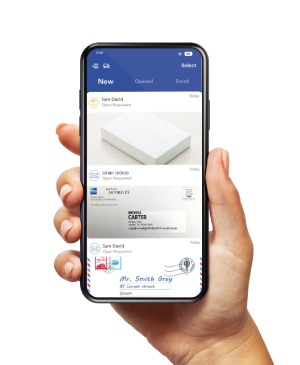
PostScan Mail helps you manage incoming physical mail and packages remotely. At the selected address, staff receive items and upload exterior images. You can then request available actions, such as opening and scanning letter contents or forwarding physical items.
Mail forwarding helps when a business owner travels, or a remote team needs a consistent place to receive correspondence. Package forwarding lets you request onward shipment of eligible items received at your selected location. Confirm carrier availability, item restrictions, storage limits, and fees for that location.
Forwarding creates an additional shipment. If a retailer ships a package to your PostScan Mail address, its tracking covers that first leg. The onward shipment has its own processing time, postage, and tracking. Allow for both legs when planning around a deadline.
The PostScan Mail shipping calculator provides estimates for forwarding items from selected locations. Its estimate doesn’t require dimensions, though dimensions can affect final charges. Verify the actual packed shipment before approving it.
If your main task is sending packages you already have, ShipDesk shipping software supports carrier rate comparisons and label creation. That workflow differs from requesting shipment of an item already assigned to your virtual mailbox.
How to choose a shipping and mailing service
Use this checklist to make each service comparison consistent.
- Define the job. Decide whether you need outbound delivery, incoming mail management, forwarding, or fulfillment.
- Classify the packed item. Record its contents, weight, dimensions, value, and any restrictions.
- Set the deadline. Separate a preferred arrival date from a deadline that requires a purchased commitment.
- Request comparable quotes. Use the same addresses, shipment date, packaging, coverage, and signature requirements.
- Confirm the handoff. Check pickup or drop-off availability and the cutoff time, then keep the acceptance receipt and tracking details, if provided.
- Assign follow-up. Decide who monitors exceptions, informs the recipient, and handles any return or claim.
For recurring shipments, review actual invoices against quoted prices. Repeated adjustments for dimensions, address errors, or pickup fees show where a process change could save money.
Build your shipping and receiving plan
Choose a service for each recurring job: routine letters, customer packages, urgent originals, and incoming business mail.
Compare total price and applicable delivery terms before committing to a single carrier for everything.
If receiving and forwarding are the missing pieces, explore PostScan Mail’s available addresses and confirm the location’s services before signing up.
A clear receiving plan makes it easier to decide what to scan, keep, and forward.
Access & Manage Your Postal Mail
Anywhere Anytime!
Receive mail anywhere, on any device.
We offer 1000+ mailing addresses for both personal and business use.